The vision
One part. One code.
Everywhere.
A manufacturer makes a part. A distributor lists it. A plant creates a material record for it. An engineer specifies it, procurement buys it, maintenance fits it. By then the same part carries a dozen numbers and a dozen descriptions, and every system that touches it repeats the work of deciding what it is.
Q-UPID ends the repetition.
What Q-UPID is
A permanent code for one manufacturer's part
Q-UPID, the Qualified Unique Part Identifier, is a permanent code for one manufacturer's part.
Identity rests on two facts: the manufacturer, resolved against governed evidence, and the manufacturer's part number, kept as the manufacturer writes it. Descriptions give context. They never decide identity. If the combination cannot be resolved, no code is issued.
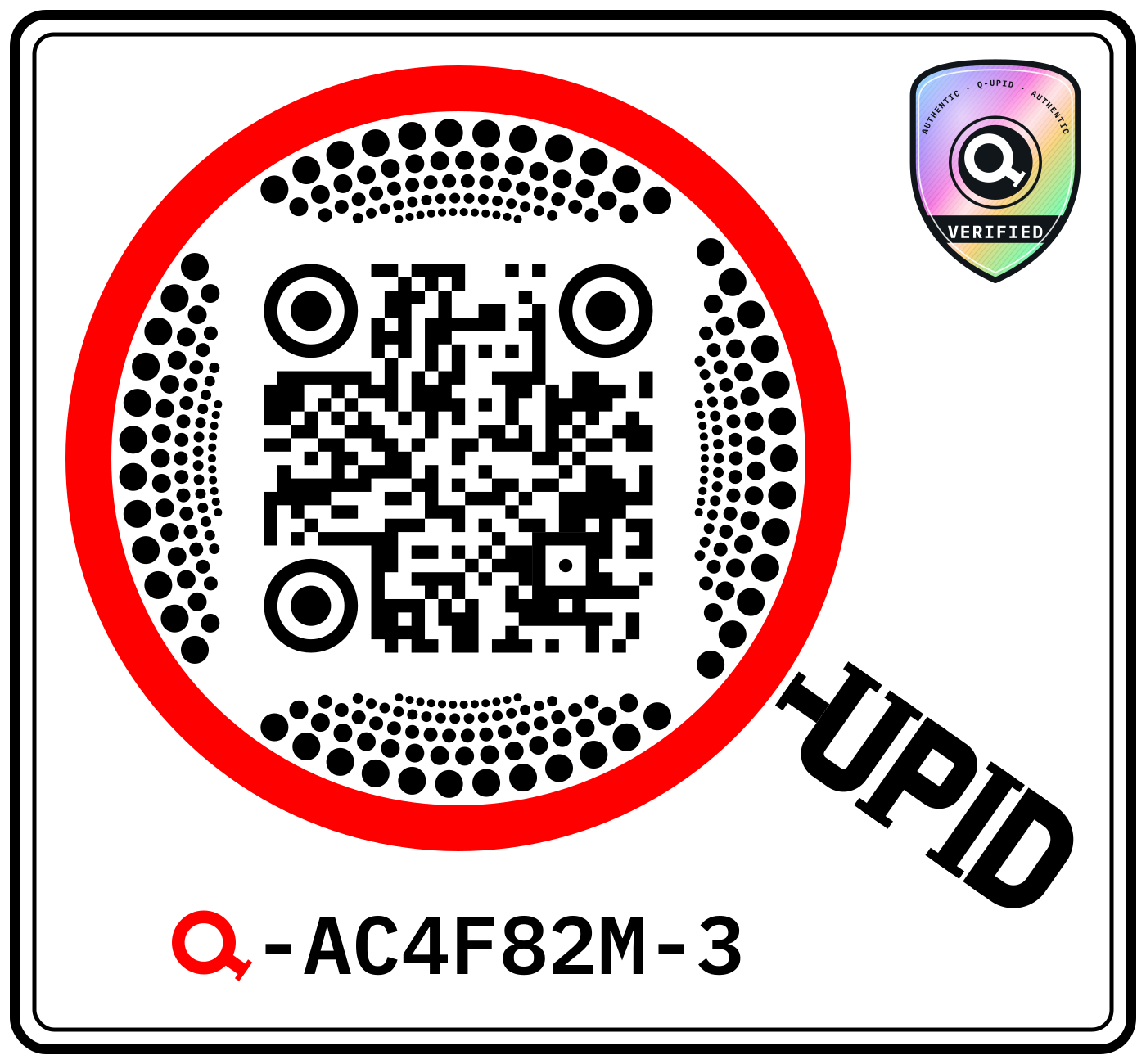
Example: Q-AC4F82M-3. Every code has the same shape, and nothing inside it means anything.
AI can search, read and propose candidates. Probabilistic discovery finds the evidence; deterministic allocation decides identity.
How a Q-UPID works
Four principles, no exceptions
- PRINCIPLE 1
Globally Unique
One code identifies one manufacturer's part, worldwide.
- PRINCIPLE 2
Manufacturer-Specific
Identical parts from different manufacturers get different codes.
- PRINCIPLE 3
Specification-Defined
Any change to part number, fit, form, function or defining specification needs a new Q-UPID.
- PRINCIPLE 4
Permanent and Immutable
A code is never changed, reused or reassigned.
Scope
What it is not
Q-UPID is not a catalogue, a specification database or a register of equivalents.
A replacement is a relationship between two parts. So is a compatible alternative. Those relationships belong in a separate layer, never inside the identifier. Nothing is silently treated as the same part.
The opportunity
Why it matters
Once records point at the same verified identity, connecting them becomes cheap. Manufacturer specification to purchase order. Documentation to installed asset. Field evidence to an AI-assisted decision.
Nobody has to give up their own numbers. Plants keep their material codes, distributors keep their SKUs, assets keep their serials. What changes is that every one of them can state, without ambiguity, which part it means.
That is the foundation on which shared industrial knowledge can be built: a reference the world can agree on, and evidence that accumulates against it instead of fragmenting across it.
Status
Where it stands
- FixedThe identifier format and its check algorithm.
- In reviewThe allocation rules and the two assurance levels, Source Verified and Manufacturer Confirmed.
- NextThe registry. Allocation is free and self-service. Charges apply only to help and data tools, never to the code.
- ThenScale: manufacturers, catalogues and the platforms that hold them.
Take part
Help set the reference layer for what comes next
If you make parts, publish catalogues or build the systems that hold them, you can help set the reference layer for what comes next.
To find out how to enable Q-UPID for your products or platform, send an enquiry or email [email protected].